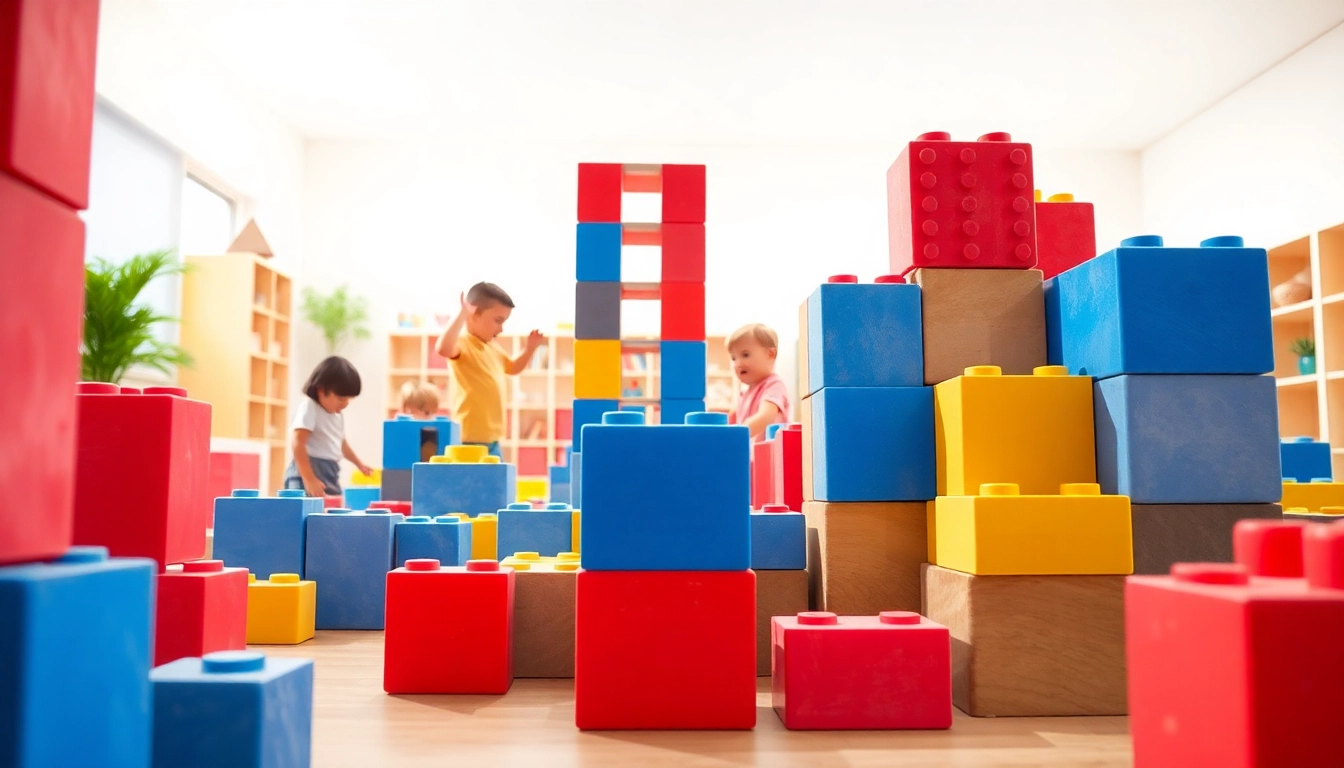
Introduction to Giant Building Blocks
What Are Giant Building Blocks?
Giant building blocks are oversized play structures designed specifically for children, allowing them to engage in creative, imaginative play. Made from various materials, including foam, plastic, and wood, these blocks come in a variety of shapes and sizes, providing endless opportunities for children to explore construction and design. Whether it’s a simple tower or an elaborate fort, giant building blocks encourage kids to express their creativity while developing critical motor skills and spatial awareness. To discover more about large building blocks and their versatility, it’s essential to understand their benefits in child development.
Benefits of Using Large Blocks for Play
The advantages of using large building blocks extend far beyond mere amusement. Studies highlight several developmental benefits associated with block play:
- Cognitive Development: Building blocks stimulate creativity and problem-solving skills as children envision what they want to create and how to achieve it.
- Physical Development: Handling large blocks helps improve fine and gross motor skills. Children learn to balance, stack, and manipulate items to form stable structures.
- Social Skills: Collaborative block-building activities encourage teamwork, communication, and negotiation among peers.
- Emotional Growth: Building and achieving complex structures can enhance self-esteem and promote a sense of accomplishment.
Ideal Age Range for Building Block Activities
While children of all ages can benefit from building blocks, the ideal age range typically begins around 2 years and lasts through early primary education (up to about age 7). Here’s a breakdown of how these activities can be adjusted by age:
- 2-3 Years: At this age, children often engage in simple stacking and knocking over blocks, which enhances motor skills and spatial awareness.
- 4-5 Years: Kids begin to experiment with more complex structures, stimulating their imaginative play and creativity.
- 6-7 Years: School-age children can handle more intricate projects that involve planning and execution, further developing their critical thinking and collaborative skills.
Creative Play Ideas with Building Blocks
Simple Structures to Start With
Engaging young children with simple projects can foster a love for building. Here are some ideas:
- Basic Towers: Encourage kids to build a tower of varying heights, teaching them about balance and stability.
- Bridges: Use blocks to create a bridge across a designated space, like a hallway or playmat, introducing them to simple engineering concepts.
- Animal Shapes: Challenge kids to create representations of their favorite animals, enhancing creativity and imagination.
Advanced Building Concepts for Older Kids
As children grow, they can take on more sophisticated challenges that engage their problem-solving skills. Consider these advanced projects:
- Multi-Level Structures: Encourage children to plan and build multi-level buildings, teaching them about the importance of support structures.
- Theme Parks: Kids can design their own miniature amusement parks, complete with roller coasters and game booths, integrating storytelling and play.
- Historical Landmarks: Inspire them to recreate famous landmarks, blending art, history, and engineering concepts together.
Incorporating Theme-Based Building Challenges
Themed building challenges can add an exciting twist to block play. Here are some ideas to implement:
- Seasonal Themes: Encourage projects based on holidays or seasons, such as building a snowman or a haunted house.
- Community Projects: Children can work together to build a model of their school or neighborhood, fostering a sense of community and belonging.
- Inventions: Prompt children to invent and build something new, like a futuristic vehicle or a robot, sparking their imagination and innovation.
Safety Tips for Indoor Block Play
Selecting the Right Environment
Creating a safe environment for block play is essential to prevent injuries. Here are tips for selecting the right setting:
- Clear Space: Ensure the play area is free from distractions like sharp objects or fragile items that may pose a danger.
- Soft Flooring: Use soft rugs or mats to cushion falls and enhance comfort during play.
- Defined Boundaries: Set clear limits for the play area to keep children focused and safe.
Supervision Strategies for Safe Play
Active supervision can significantly reduce the risk of accidents:
- Engage with Children: Involvement in their play can help you spot potential hazards and encourage safe practices.
- Teach Safe Play Rules: Educate children on how to handle blocks safely, emphasizing carrying them appropriately and recognizing when towers may be unstable.
- Rotate Supervision: For larger groups, consider having multiple adults supervise to ensure constant vigilance.
Choosing Non-Toxic, Durable Materials
Safety should always come first when selecting building blocks:
- Material Safety: Ensure that materials are non-toxic and free from harmful chemicals, especially for younger children.
- Durability: Opt for blocks made of durable materials that can withstand rough handling and prevent breakage.
- Size and Weight: Choose blocks that are appropriately sized for children's hands, promoting ease of use and minimizing risk.
Expanding Play with Educational Activities
Math and Architecture Concepts through Blocks
Giant building blocks can serve as an effective tool for learning fundamental math and architectural concepts:
- Geometry: Encourage children to identify shapes and practice counting as they build.
- Measurement: Teach children how to measure successfully using blocks to create specific dimensions.
- Architectural Basics: Introduce concepts like symmetry, balance, and design elements through their creations.
Incorporating Storytelling in Building Sessions
Storytelling can be woven into block play, enhancing engagement and creativity:
- Character Creation: Children can create characters or settings that they then incorporate into their builds, enriching the play experience.
- Themed Narratives: Set a storyline for their blocks, allowing kids to enact scenes from their favorite stories.
- Collaborative Storytelling: Encourage children to build together while coming up with a cohesive story, fostering cooperative play.
Learning Teamwork and Social Skills
Building blocks promote teamwork, which is essential for social development. Here are ways to enhance this learning experience:
- Group Projects: Assign small groups to create larger structures together, teaching collaboration and negotiation.
- Role Distribution: Assign specific roles within group projects to help children learn about responsibility and leadership.
- Reflect on Experiences: After building, have children discuss what went well and what could be improved, promoting critical thinking and teamwork.
Frequently Asked Questions
How do I choose the right building blocks?
Look for blocks made from safe, durable materials. Consider the age of your child and choose sizes that are easy to handle while allowing for creativity.
What age can children start playing with giant blocks?
Children can typically start playing with large blocks around 2 years old, as they develop motor skills and spatial awareness.
Are there safety standards for children's building blocks?
Yes, building blocks should comply with safety standards specific to children's toys, ensuring they are non-toxic and safe for play.
Can giant building blocks be used outdoors?
Yes, giant building blocks can be used outdoors, but they should be made from weather-resistant materials to ensure durability.
How to clean and maintain building blocks?
Clean blocks regularly with mild soap and water; avoid harsh chemicals. Store them in a dry area to prevent mold or damage.